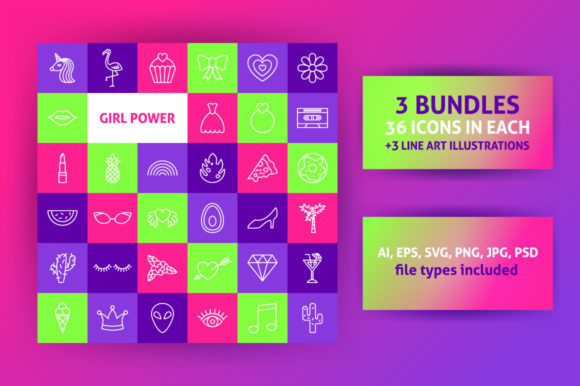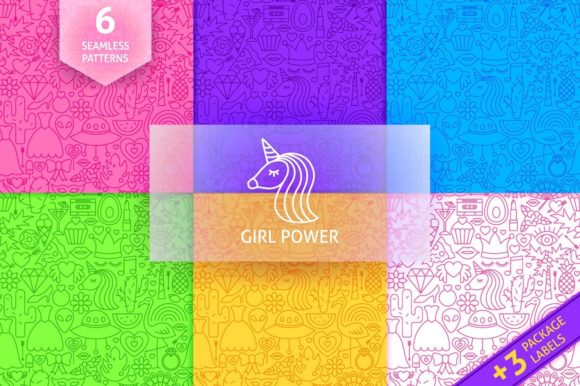
Girl Power Line Tile Patterns
A Designer’s First Stitch Test: What This Pattern *Actually* Looks Like on Fabric
When I opened the Girl Power Line Tile Patterns bundle, my first thought wasn’t “cute” or “trendy”—it was “how will this hold up in thread?” As someone who’s stitched hundreds of custom totes, baby onesies, and boutique aprons, I know thin-line vector patterns can either sing or disappear under needle and bobbin. These six seamless tiles land firmly in the “sing” category—but only when matched to the right project. The outlines are clean, confident, and intentionally minimal—not fragile, but focused. There’s no visual noise, no filler detail, just rhythmic, interlocking shapes that echo empowerment without shouting it. That subtlety is exactly what makes them work for real embroidery—not as a statement piece alone, but as texture, rhythm, and quiet intention.
Where It Shines (and Where It Steps Back)
I tested one tile across three real-world items: a medium-weight cotton tote bag, a 100% cotton baby bodysuit, and a structured twill cap. On the tote? Perfect. The line weight translated cleanly into a delicate running stitch—light enough to feel handmade, strong enough to read at arm’s length. Customers paused mid-browse to trace the pattern with their fingers. On the bodysuit? Equally successful—especially because the seamless repeat meant I could scale it down to fit the chest pocket area without distortion. But on the cap? That’s where judgment mattered. The curved surface compressed some corners, and the ultra-thin lines needed extra stabilizer support to avoid puckering. Not a flaw—just a reminder that Girl Power Line Tile Patterns thrives on flat or gently contoured surfaces, not high-curve zones like crown seams or deep brim folds.
Smart Uses for Real Embroidery Projects
- Custom apparel: Ideal for sweatshirt cuffs, t-shirt hems, or sleeve bands—adds identity without overwhelming the garment.
- Personalized gifts: Works beautifully on tea towels, pillow covers, and nursery wall hangings where soft repetition feels intentional and calming.
- Small shop merchandise: A standout for boutique-branded aprons or market totes—subtle enough for professional settings, meaningful enough for mission-driven brands.
- Digital product previews: Because these are vector-based, they scale cleanly for printable mockups—no pixelation when showing clients how a pattern wraps around a pillow or repeats across a scarf.
What to Watch For Before You Stitch
This isn’t a “load-and-go” design—and that’s a good thing. Its strength lies in thoughtful application. Here’s what I checked before committing to client work:
- Stitch density: Since it’s an outline-based pattern, fill stitch isn’t involved—but running stitch length and jump stitch placement still affect flow. I slowed the machine slightly on curves to preserve line integrity.
- Fabric texture: On slubbed linen or heavy terry cloth, I added a tear-away + cut-away hybrid stabilizer. The thin lines need firm backing to stay crisp.
- Thread color contrast: Tested both black thread on oatmeal canvas and white thread on navy twill. On dark fabric, I increased top tension just slightly to prevent thread nesting—small adjustment, big clarity payoff.
- Hoop size & placement: One tile fits comfortably in a 4x4 hoop, but the seamless nature means you can nest multiple repeats in larger hoops for continuous coverage. Just confirm your machine handles the file’s native repeat logic before scaling.
- Licensing for commercial use: As a craft business owner, I double-checked whether the license permits finished product resale—especially important for Etsy sellers bundling embroidered patches or digital embroidery files.
Why It Builds Trust—Not Just Texture
Customers don’t buy patterns—they buy feeling, consistency, and care. When a customer sees Girl Power Line Tile Patterns on a hand-stitched kitchen towel or baby blanket, they sense intention. Not gimmickry. Not trend-chasing. The restraint in the line work signals craftsmanship. That translates directly to perceived value: people pay more for items that look considered, not crowded. I’ve watched buyers linger longer on products using these tiles—not because the pattern is loud, but because it invites closer looking. That pause builds connection. And for small shop owners, that’s gold: repeat customers, Instagram tags, word-of-mouth referrals. It also supports brand consistency beautifully—whether you’re stitching for a women-led studio, a feminist bookstore, or a gender-inclusive children’s line.
Final Thoughts From the Hoop
If you’re choosing Girl Power Line Tile Patterns for a machine embroidery design, remember: its power is in its precision—not its volume. It won’t dominate a busy sweatshirt front, and it’s not built for dense fill areas or tiny lettering accents. But for custom apparel that whispers confidence, for personalized gifts that feel quietly significant, and for small business merchandise that balances aesthetic and ethos? It delivers. I’ve already used it on holiday gift sets, baby shower favors, and limited-run aprons—and each time, the feedback has been the same: “It’s so *you*.” That’s the mark of a well-chosen pattern asset: not flashy, but unmistakable. Just make sure you test it first on scrap fabric, check thread contrast on your intended background, and confirm your stabilizer matches your fabric’s behavior. Then let the lines do the rest.